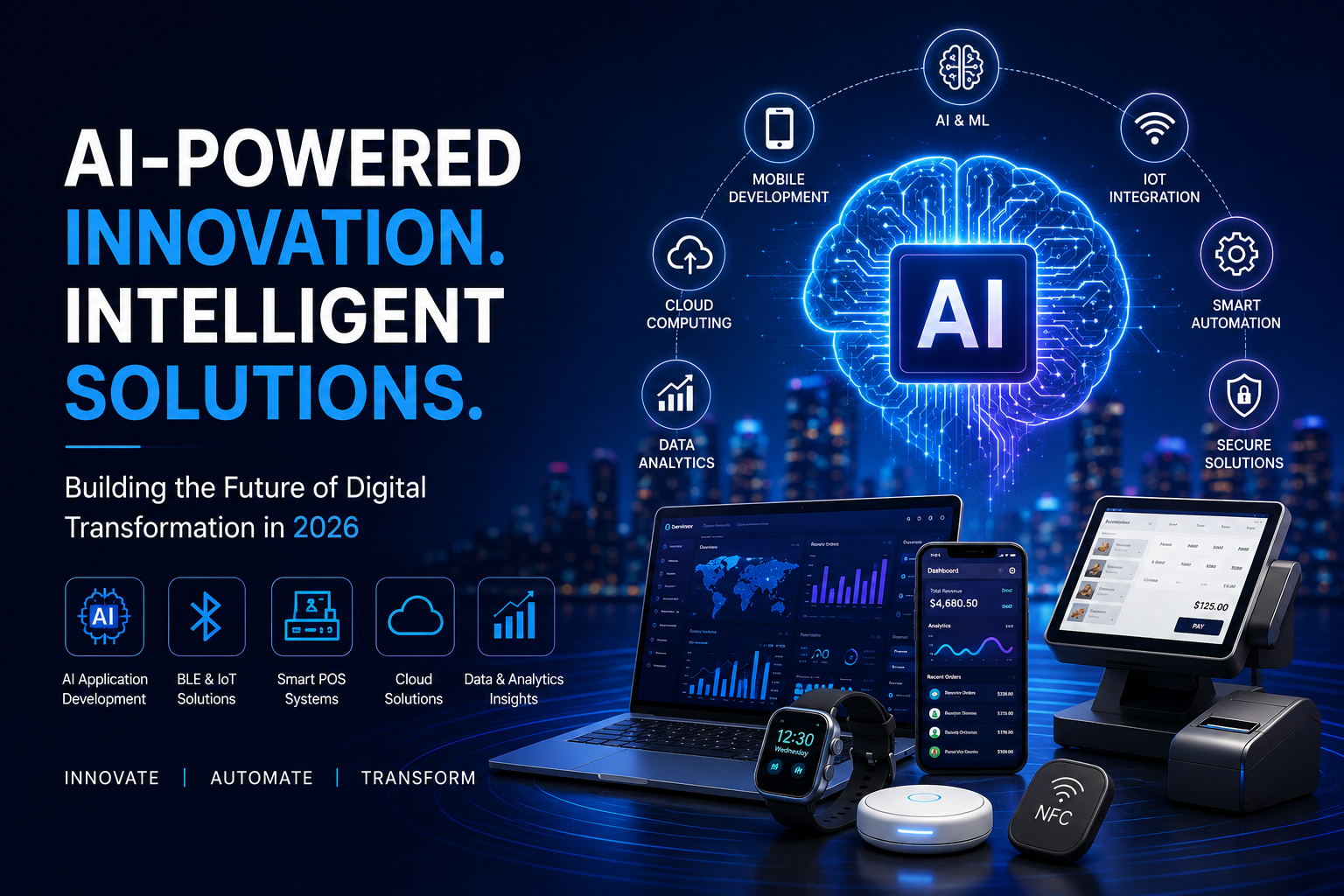
AI App Development in 2026: Building the Next Generation of Intelligent Digital Products
Artificial Intelligence is no longer a futuristic concept—it is the foundation of modern digital innovation. From intelligent assistants and predictive analytics to autonomous workflows and hyper-personalized experiences, AI-powered applications are reshaping industries across the globe.
In 2026, businesses are no longer asking whether they should integrate AI into their products. The real question is: How fast can they leverage AI to gain a competitive advantage?
As customer expectations evolve, organizations are investing heavily in AI app development to create smarter, faster, and more engaging digital experiences. AI-native applications, autonomous agents, multimodal interfaces, and real-time personalization are becoming industry standards rather than optional features. (brineweb)
What is AI App Development?
AI App Development is the process of creating software applications that use Artificial Intelligence technologies such as:
- Machine Learning (ML)
- Natural Language Processing (NLP)
- Computer Vision
- Generative AI
- Predictive Analytics
- Voice Recognition
- AI Agents
Unlike traditional applications that follow predefined rules, AI-powered applications can learn from data, adapt to user behavior, automate decision-making, and continuously improve performance.
Why Businesses Are Investing in AI Applications
Modern businesses face increasing demands for efficiency, automation, and customer engagement. AI applications help organizations:
Automate Repetitive Tasks
Reduce manual workloads and increase operational efficiency.
Deliver Personalized Experiences
Provide tailored recommendations, content, and interactions based on user behavior.
Improve Decision Making
Analyze vast amounts of data to generate actionable insights.
Increase Customer Satisfaction
Offer intelligent support through AI chatbots and virtual assistants.
Reduce Operational Costs
Automate workflows while improving productivity and scalability. AI adoption is increasingly tied to productivity gains and faster software delivery. (Reuters)
Key AI App Development Trends in 2026
1. AI-Native Applications
Businesses are moving beyond simply adding AI features. Modern applications are being designed with AI at their core architecture.
Examples include:
- Intelligent productivity platforms
- AI-powered CRMs
- Smart healthcare systems
- Automated business workflows
AI is rapidly becoming the central layer of modern application design. (Redmind)
2. Autonomous AI Agents
AI agents can now perform complex multi-step tasks independently, including:
- Scheduling meetings
- Managing customer interactions
- Processing business data
- Executing workflows
This shift is transforming AI from an assistant into an active digital workforce. (brineweb)
3. Multimodal AI Experiences
Users increasingly expect applications to understand:
- Text
- Voice
- Images
- Video
Multimodal AI enables more natural and context-aware interactions. (Aitude)
4. Hyper-Personalization
AI can analyze user behavior in real time and deliver:
- Personalized interfaces
- Customized recommendations
- Dynamic content experiences
- Predictive suggestions
Personalization is becoming a major competitive differentiator. (Redmind)
5. On-Device AI
Running AI models directly on smartphones and edge devices offers:
- Faster response times
- Better privacy
- Reduced cloud costs
- Offline functionality
This trend is especially important for mobile applications. (YouWare)
Industries Being Transformed by AI Apps
Healthcare
- Remote patient monitoring
- AI diagnostics
- Medical image analysis
- Virtual health assistants
Retail & E-Commerce
- Personalized shopping experiences
- Demand forecasting
- Product recommendations
- Customer service automation
Finance
- Fraud detection
- Risk assessment
- AI-driven investment insights
- Automated customer support
Education
- Intelligent tutoring systems
- Adaptive learning platforms
- AI-powered assessments
Logistics
- Route optimization
- Predictive maintenance
- Supply chain automation
Essential Features of a Modern AI Application
Successful AI applications typically include:
Intelligent Chat Interfaces
Natural conversations powered by advanced language models.
Predictive Analytics
Data-driven forecasting and recommendations.
Real-Time Learning
Continuous improvement based on user interactions.
Voice & Speech Processing
Hands-free interactions and accessibility.
Advanced Security
AI-powered threat detection and fraud prevention.
Cloud Scalability
Support for growing user bases and increasing workloads.
The AI App Development Process
Step 1: Discovery & Strategy
Identify business goals, target users, and AI opportunities.
Step 2: Data Collection
Gather and organize quality datasets for training and optimization.
Step 3: AI Model Selection
Choose the most suitable AI technologies and frameworks.
Step 4: Design & Development
Build intuitive user experiences integrated with AI capabilities.
Step 5: Training & Testing
Validate accuracy, performance, and reliability.
Step 6: Deployment
Launch the application across web, mobile, or enterprise environments.
Step 7: Continuous Improvement
Monitor usage patterns and retrain models as needed.
Challenges in AI App Development
While AI offers enormous potential, businesses must address:
- Data privacy concerns
- Model accuracy and bias
- Regulatory compliance
- Infrastructure requirements
- Ongoing model maintenance
Organizations increasingly prioritize responsible AI, governance, monitoring, and lifecycle management to ensure reliable deployment. (Aitude)
Why Partner with an AI App Development Company?
Building successful AI applications requires expertise in:
- Artificial Intelligence
- Machine Learning
- Mobile Development
- Cloud Infrastructure
- Data Engineering
- Security & Compliance
An experienced AI development team can accelerate delivery, reduce risk, and help transform innovative ideas into scalable digital products.
Final Thoughts
The future belongs to intelligent applications. In 2026, AI is no longer just a feature—it is the driving force behind next-generation digital experiences. Businesses that invest in AI-powered solutions today will be better positioned to automate operations, enhance customer engagement, and unlock new growth opportunities.
Whether you’re launching a startup, modernizing enterprise software, or creating the next breakthrough platform, AI app development is the key to building smarter, faster, and more impactful products for the future. (brineweb)